
Tracing Former Marquette County Owners
Treat the current parcel description as a key, nothing more. It unlocks the older chain but does not contain it. Every recorded deed pairs a grantee with a grantor, and the county has posted no online cutoff date. Use the source table as a route. If a search stalls, ask the Register of Deeds which book, film or finding aid picks up the trail from there.
| Source | Years It Covers | Where Held | What It Shows |
|---|---|---|---|
| ColorTract tract index | Earliest online year not stated | Register of Deeds link | Visible drawers: Range Books, Platted Lands, CSMs |
| Deed books and microfilm | Coverage not verified | Ask the Register of Deeds | Earlier grantor-grantee entries and instruments |
| 1900 county plat book | 1900 atlas | Wisconsin Historical Society | Historic community, lot and township context |
| Probate and estate filings | Case-dependent | Register in Probate | Heirship, appointment and fiduciary-transfer clues |
A recent transfer starts with the current deed. A chain reaching past the online index calls for older books or microfilm. When a legal description changed, compare the deed against a plat or CSM. If a name vanishes after a death, probate and transfer-on-death filings may hold the answer. A map adds location context. It never substitutes for the recorded instrument itself.
ColorTract's Marquette County Drawers
ColorTract's public landing page lists Range Books, Platted Lands and CSMs rather than a visible address form. The anonymous text view shows no grantor, grantee, parcel, date, document-number or book-and-page controls. That drawer layout is a local quirk. Pick the right land record family, then ask the Register of Deeds how the index works when your expected field is missing. The ColorTract landing page shows the three file drawers in the visible text. Never assume the first visible result is the whole ownership story. Save the instrument reference, legal description and image status at every step. If the online trail stops, ask for a deed book, range book, microfilm or archival finding aid instead of guessing at a cutoff year.
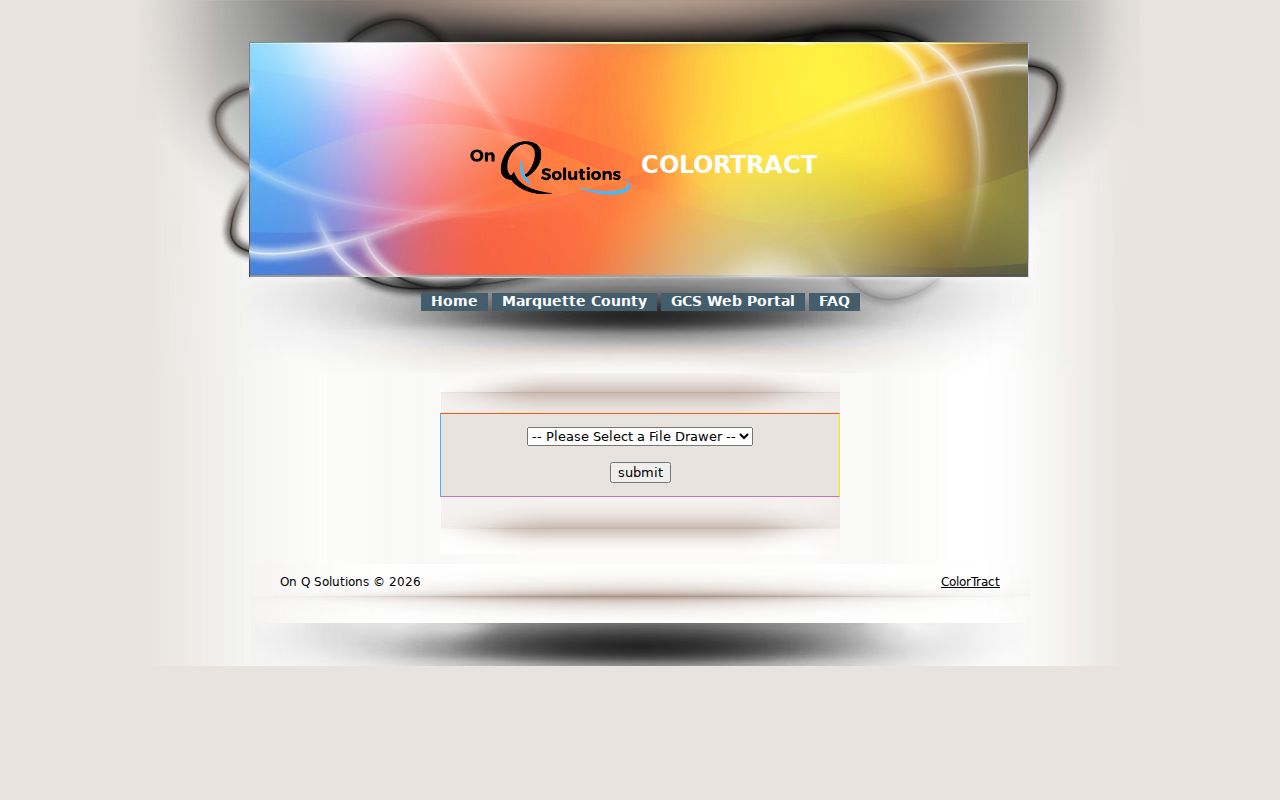
Let the drawer list frame your question to the county. It is not evidence of a complete online year range.
Walking the Marquette County Deed Chain Backward
Walk the last conveyance backward, one owner at a time. Read the grantee on that instrument. The grantor is the person who held the prior interest. Carry the exact legal description forward with each row you record. A chain can branch. A tract may have split, passed through an estate, or shifted from a township description to a platted lot.
- Find the latest deed for the parcel and record its grantor, grantee, date, instrument reference and full legal description.
- Search the grantee name backward to find the earlier conveyance into that party.
- Repeat with the earlier grantor, checking name variants, trust names and business suffixes as supported by the instrument.
- When the online index ends or the legal description changes, ask for older books, film, plats or probate filings.
- Grantor
- The party who conveyed an interest in a deed.
- Grantee
- The party who received that interest.
- Chain of title
- The linked sequence of instruments for one parcel.
- Legal description
- The lot, plat, CSM or survey-grid description used to identify land.
Marquette County's Online Cutoff
The Register of Deeds page states no earliest ColorTract year, image cutover or coverage range. The county publishes no courthouse-fire or lost-book notice. Read neither silence as proof of a missing record. Instead, ask Room 106 which grantor-grantee indexes can extend your chain. Ask which books or microfilm cover the parcel and years involved. When the office gives a date or volume range, note what it covers. An index, a deed image, a book series and a recording date are not always the same thing. A chain can be searchable in an index. The image may still require a counter request.
Marquette County's 1900 Plat Book
The Wisconsin Historical Society offers a digitized 1900 Plat Book of Marquette County. It holds 40 numbered pages. A City of Montello South Part image is among the plates. Other sheets identify townships and communities such as Oxford, Westfield, Briggsville, Lawrence, Harris, Shields and Neshkoro. Use the atlas to orient an older road, tract or lot name. Then ask the Register of Deeds for the matching plat or deed book. Remember, the book is a historic map. It is not a current tax roll, deed index or legal boundary. Compare each plate with the modern legal description. Label every finding, so a later reader can tell an atlas clue from a recorded conveyance. The Wisconsin Historical Society atlas record identifies the digitized map and its assets.
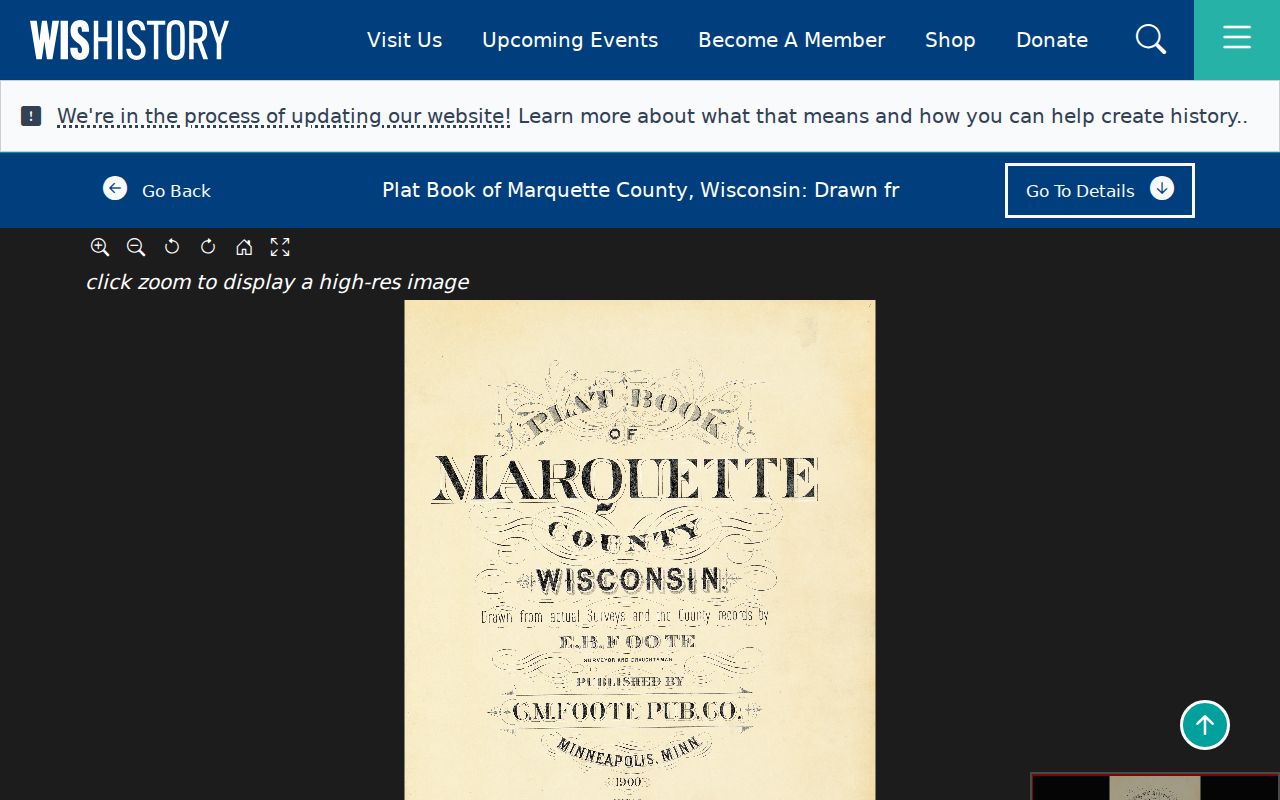
Use the map for historic geography. Then return to the deed or CSM for the recorded legal description.
Probate and Marquette County Transfers
A prior owner may never have sold the parcel in an ordinary market transfer. When an owner died, the estate file can hold a will, proof of heirship, appointment papers and inventory. It can also hold orders and a fiduciary deed. The Register of Deeds also lists transfer-on-death instruments and TOD-110 terminations of a decedent's property interest. These records explain a name change when no deed looks like a sale. Marquette County Register in Probate sits in Room 205, 608-297-3009. Search the public case or call the office. Compare any transfer document against the recorded land description. A probate file may contain restricted information, so request only public title-related filings. A death certificate alone proves nothing about ownership.
Old Addresses and Marquette Plats
A street address can be younger than the land it sits on. Marquette County property records often describe a tract by section, township and range, by government lot, or by a named plat or CSM. The county's sample fields include Section, Town, Town Direction, Range, Range Direction, 40, 160, Government Lot, Plat, and Block or Condo Building with its type and number. One recorded example reads Section 19, Town 15 North, Range 09 East, with CSM 4036, Lot 1.
Follow the exact legal description at every transfer. That is the real key. If the wording shifts, figure out whether the parcel was split, combined, platted or renumbered before you treat the next deed as part of the same chain. A postal city and street number alone make a weak match for older records.
How Far Back Marquette County Ownership Records Go
Marquette County dates to 1836. That means its land history can reach well beyond the modern parcel system. The Register of Deeds publishes no first online year and no earliest deed book. It lists no records-loss history either. A 1900 atlas survives as a map. Even so, it cannot prove who held title in any earlier year. For the oldest deed books and index runs, ask the county or the Wisconsin Historical Society directly. Archival finding aids come from those same sources.
A house-history project benefits from wider context too. The Marquette County Historical Society and local libraries can add family, business, and community background. That is color a deed alone lacks. Use those sources to build out a name or an old place clue. Then verify the clue against a deed and its legal description. That final step keeps the ownership chain honest.
Lawful use. Former-owner research in Marquette County can support house history, title review and property diligence. Do not use the record trail to follow, intimidate or harass a living person.