
Values on a Marquette County Property Record
Value questions about Marquette County property records often mix three figures. One is the local assessment. Another is equalized value, a state comparison measure. A third is a recorded sale price. The county ownership portal does not display parcel-card fields without a login, so do not assume it shows all three side by side. Wisconsin's assessment guidance covers assessed value, assessment level, and equalized value; the state Property Assessment Manual describes the fair-market estimate printed on tax bills, and a recorded deed remains the source for an actual conveyance price.
| Value | What It Is | Where |
|---|---|---|
| Assessed value | Local parcel assessment used in the property-tax system | Land Information / assessor record |
| Equalized value | State comparison measure for municipal assessment levels | Wisconsin Department of Revenue |
| Estimated fair-market value | Value identified by Wisconsin assessment guidance for tax bills | Assessment and tax-bill record |
| Last sale price | Consideration tied to a conveyance; exact local display not verified | Deed / transfer record, confirm with ROD |
| Land and improvement split | Parcel-card field not exposed in the reviewed portal | Confirm in the live record |
An assessment exists for the tax system. It is not an appraisal of what one buyer would pay. Equalized value compares towns, not parcels. It never quotes an individual sale. A deed or transfer entry records a past conveyance, while a tax-bill value follows state assessment rules, so each figure belongs to its own paperwork.
Marquette County Value Fields and Access
Land Information points to the county Public Portal. It calls that portal the most up-to-date ownership source. The portal opens to login fields. Catalis LandNav does not display a parcel card to anonymous visitors, and the logged-out screen shows no value labels, land and improvement amounts, or sales-history fields. Confirm live fields before comparing parcels.
Access runs through Land Information. Call 608-297-3029 or visit Room 103 at 77 West Park Street, and ask which year a value represents. Ask as well whether it is local assessed value, equalized value, or another figure. The Marquette County property search route explains the steps.
The county's Public Portal shows the login screen a visitor encounters before any value fields appear.
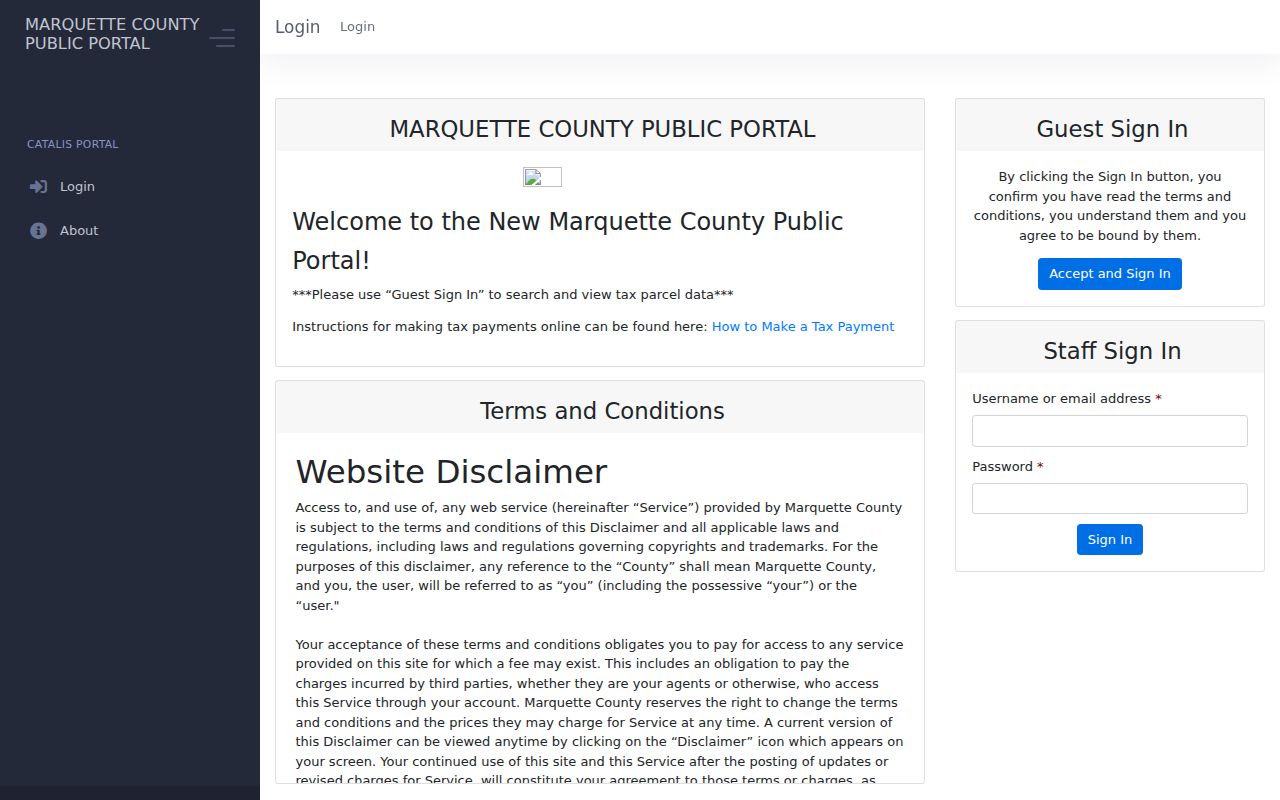
This screenshot is not a value page; it documents the access limit.
Looking Up a Marquette County Property Value
Find the parcel first. Then read the label and year. A number without its type or year misleads easily, since a local assessment, an equalized value, and an estimated fair-market value are not interchangeable. The logged-out portal shows no card, so apply this workflow only when the live record presents those fields.
- Follow the county link to the Public Portal and search the parcel if the current access screen permits.
- Copy the value label, year and municipality exactly as displayed.
- Use Wisconsin DOR’s aggregate-ratio and equalized-value sources only for the municipal comparison they describe.
- For a past sale, locate the deed or transfer record and verify what consideration information is actually shown.
- Assessed value
- The local value assigned to a parcel for assessment and tax purposes.
- Market value
- An estimate of likely sale value under market conditions, not the same as a tax assessment.
- Assessment level
- The relation of local assessed value to equalized value.
- Sale consideration
- The value reported with a transfer; its display on a local record must be confirmed.
Assessment Ratio and Marquette County Value
Wisconsin works with two related terms. The Department of Revenue glossary defines assessment level by comparing locally assessed value with equalized value. The assessment ratio describes how one parcel relates to that level. Both measures test the assessment system itself. Neither tells you what one house would sell for.
The county's assessed-value fields sit behind the portal login along with current parcel details. Use the DOR aggregate-ratio report instead. For a municipal comparison, check the Open Book and Board of Review calendar for the correct municipality. Never swap in a countywide average.
Fair-Market Value on Tax Bills
Wisconsin's Property Assessment Manual puts an estimated fair-market value on tax bills. The manual also sets a five-year compliance rule. That estimate is still an assessment figure built under the state system. It is not a private appraisal. No buyer, sale, or refinance should lean on it. Compare it with the assessed value first, and check the bill year too.
Bills open through the portal's Taxes tab. The logged-out screen shows no sample bill, so print one through the current portal or ask the Treasurer how to obtain the field and its year. The county's tax-bill instructions show where the bill opens.
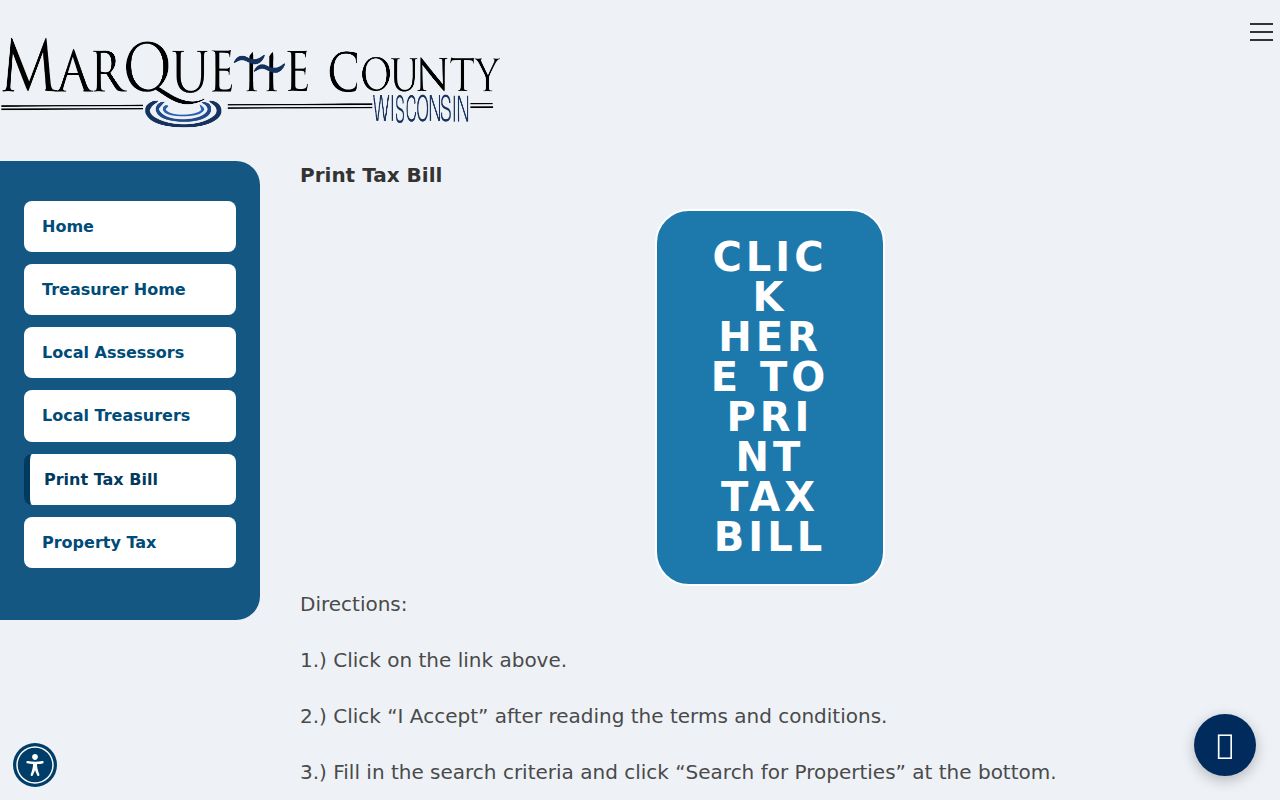
The screenshot shows bill navigation rather than an assessed-value result.
Recorded Sale Price and Marquette Deeds
A recorded sale is history, not a market estimate. Start with the deed that conveyed the parcel. Record its date, parties, and legal description. No county source states whether the LandNav card shows a sale-price field or how consideration is displayed. A blank field does not mean no sale occurred.
The Register of Deeds landing page offers Range Books, Platted Lands, and CSMs drawers. Its online cutoff is not published. When the online view cannot settle the sale, ask for the applicable index or instrument. For bill status and review steps, the Marquette County property tax records route takes over.
Equalized Value Across Municipalities
Equalized value compares municipalities. It apportions taxes across them, too. It never values one parcel. Wisconsin DOR publishes aggregate ratios and statewide guidance because local assessors and equalized values serve different roles. Marquette County spans 19 municipalities for tax-bill preparation. Select the municipality attached to the parcel before comparing assessment levels. A postal city can differ from the tax municipality, so use the parcel's county record and map position to pick the right local context. Never apply a nearby town's ratio just because it shares a ZIP code.
Marquette County Imagery and Value
Marquette County's 2024 Land Information update covered an $84,072 WLIP grant. It also included NextGen 9-1-1 GIS funding. The money supports a scheduled 2025 countywide orthoimagery project. The project upgrades imagery from 6-inch to 3-inch pixels. Sharper aerial views make it easier to orient a parcel and spot its improvements. That is where their usefulness ends.
Imagery is not valuation evidence. A roof outline or a visible addition does not establish assessed value. It does not establish a sale price either. Use imagery only as a map aid. Then confirm the parcel and its assessment field through the county record itself. If an improvement looks different from what the tax roll shows, ask the proper assessor or the Land Information contact. Do not estimate value from pixels.
Marquette County Value Review Dates
Wisconsin DOR's Open Book and Board of Review calendar covers dates across the state. It lets property owners look up local dates by municipality. Marquette County has no single appeal window. There is no one countywide value trend, either. And no citywide last-revaluation year to rely on. Check the current local schedule and the notice for the specific parcel. Keep the two processes straight. The Board of Review corrects an assessment. The tax bill simply shows the amount due.
The DOR calendar is the source for current Open Book and Board of Review dates.
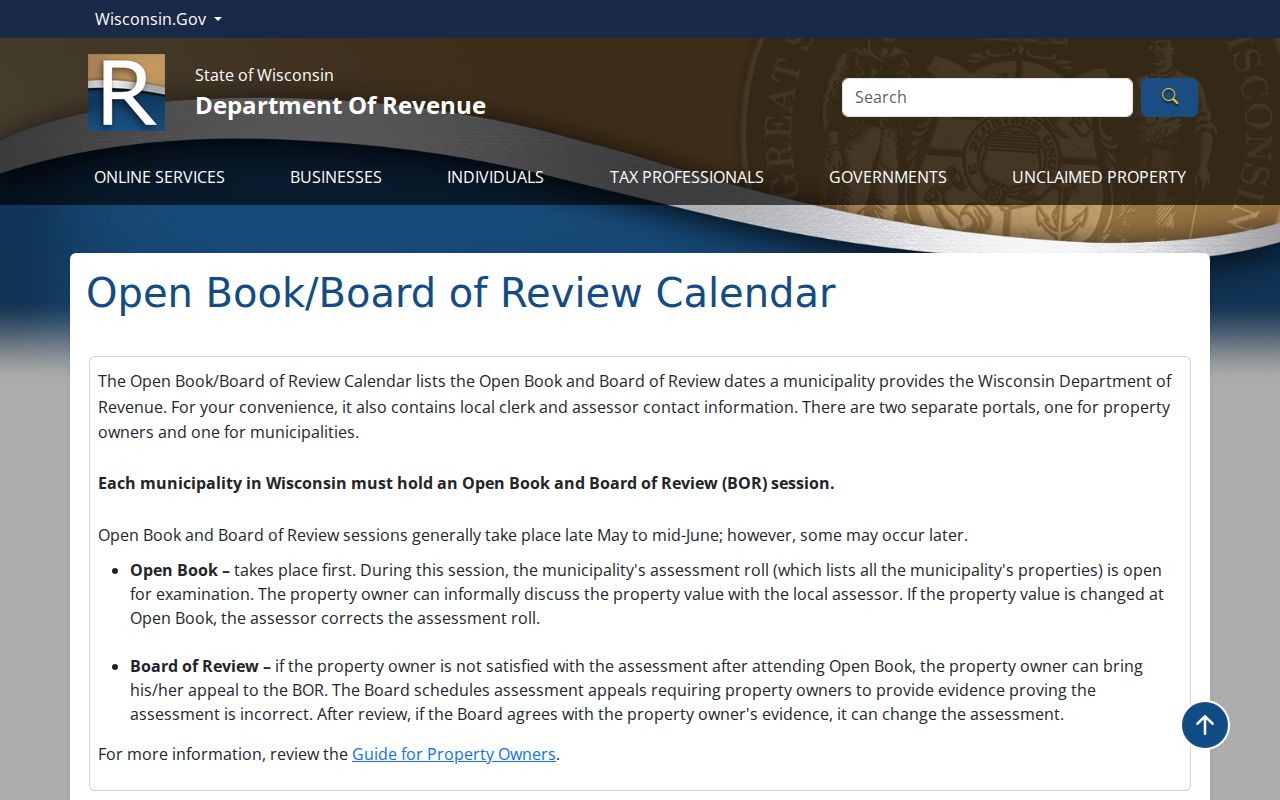
Use the specific municipality listing rather than a neighboring community’s review date.
What a Marquette County Assessed Value Is Not
A Marquette County assessed value belongs to a public tax system. It is not a guaranteed sale price. It is not a real-estate appraisal or a promise that a buyer will pay that amount. Equalized value exists for municipal comparison, and recorded consideration reflects a past transaction. Read each number with its label, its year, and its custodian.
Value vs price. The Marquette County assessed value is for the tax system and is not what the property would sell for. Use a licensed appraiser for a market appraisal.