
How to Find a Marquette County Property Owner
Use a short trail, not one result. Land Information links to the Public Portal, the county's most current source for ownership. The Register of Deeds supplies the recorded conveyance. A GIS map confirms the parcel. If the portal asks for credentials, the courthouse and the Land Information office are the practical fallback.
- Search the address through the county Public Portal if the current interface permits access.
- Record the parcel identifier, legal description and owner display that are actually shown.
- Compare the parcel location in the county GIS Hub so a similar street or postal city does not lead to the wrong lot.
- Ask the Register of Deeds for the latest conveyance and compare the grantee and legal description.
- If the grantee is an entity, use the state business record only to understand the entity name, then return to the deed for parcel ownership.
Why LandNav May Stop at Login
Marquette County points to its Public Portal as the most up-to-date source for ownership data. The portal itself stops many visitors cold. It opens on Username, Password and Login fields. No public parcel search or owner card sits behind that screen. The county's own tax instructions describe a property search that begins only after you accept terms, without spelling out the fields or whether an unauthenticated owner lookup exists. That gap matters. A county link can be public-facing while the search behind it stays gated. Follow the Land Information link first. If the portal still demands credentials, contact staff, and never mistake a login screen or a search-engine snippet for an ownership result. The county Public Portal shows the visible login controls.
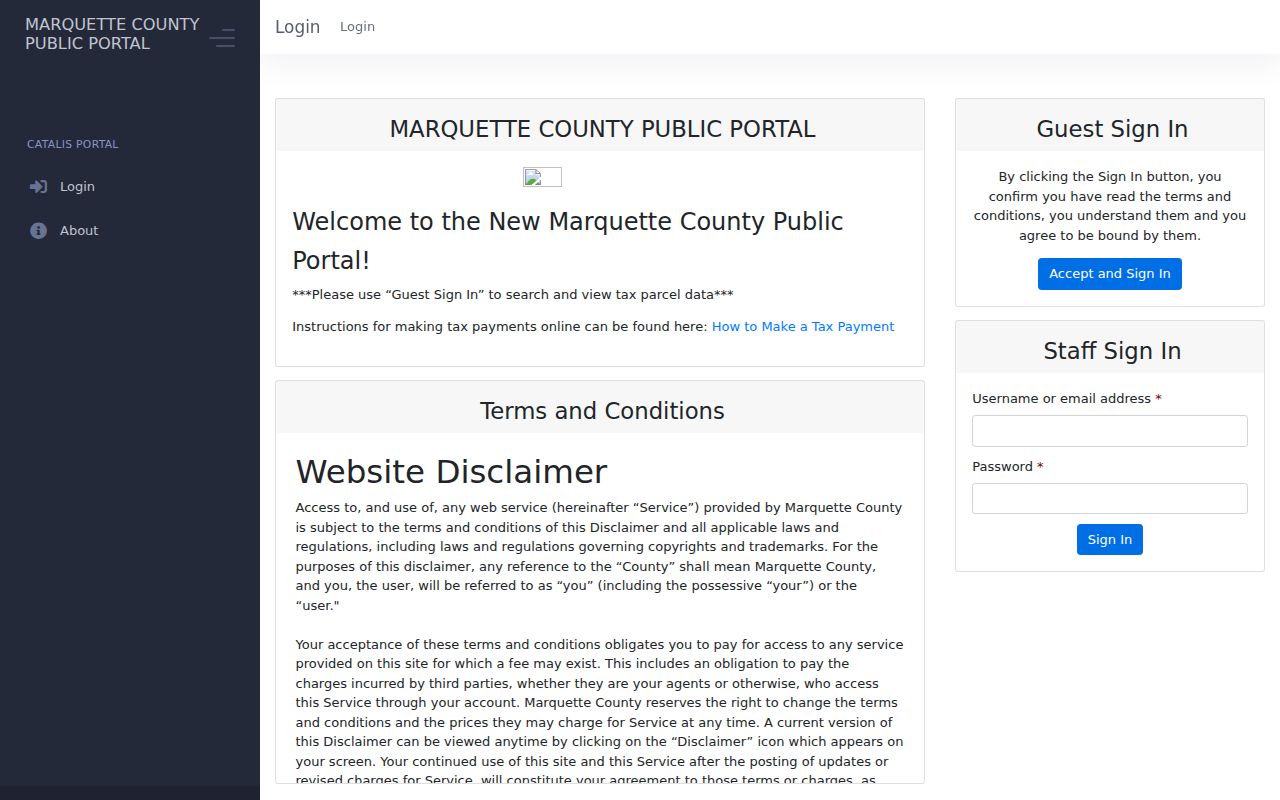
The screen shows a barrier, not an owner field.
Where Marquette County Owner Information Comes From
An owner name can surface in several records, each kept for a different reason. Land Information's roll is an administrative display. A Register of Deeds instrument records the conveyance itself. Probate can explain how a parcel passed after an owner's death. A GIS map helps you locate the parcel. Before treating two records as the same property, match the legal description across every source.
| Source | Owner Info It Gives | Access |
|---|---|---|
| Public Portal | County’s current ownership route; exact card fields not exposed anonymously | LandNav link; login screen appeared |
| Register of Deeds | Grantee and grantor on recorded instruments | ColorTract drawers or Room 106 |
| Wisconsin DFI | Business entity and registered-agent information | State corporate-record search |
| Probate file | Estate authority and filings that explain a death transfer | Register in Probate, Room 205 |
| GIS Map Hub | Parcel location; popup details not verified | County ArcGIS Hub |
An owner of record is what the custodian displays. That party may not live at the parcel. A mailing address can belong to an owner, trustee, estate or agent, sometimes outside Marquette County. For what interest actually passed, the deed and any later estate instrument carry more weight.
LLCs, Trusts and Estates
Many parcels pass to a company, trust or estate. Copy the deed name exactly. Keep every punctuation mark and entity suffix. Wisconsin DFI's Corporate Registration Search can explain a company's registered name and agent, but it proves nothing about who owns a specific parcel. The recorded deed is the parcel evidence. When an owner has died, ask the Register in Probate for the public estate file and the Register of Deeds for a transfer-on-death record, TOD-110 termination or personal-representative deed. Probate papers may include heirship proof, appointment records, inventory and orders. Request only the public title-related filing. Staff cannot give legal advice.
Mailing Address Is Not Situs
Situs is the physical place of the parcel. The mailing address is where the tax notice goes. In Marquette County those two are often different fields, and a mailing address can sit outside the property's municipality or even the county. Filing a mailing-address change form reroutes the notice. It changes nothing about ownership. Keep situs, tax municipality and mailing address as three separate facts whenever you compare records. Near a city, village or town line, the postal city is a poor guide to the tax jurisdiction. Trust the GIS shape and the municipality shown on the county record. Don't infer residence from it. The county Land Information page links both the mailing-address change form and the public-portal route to ownership data.
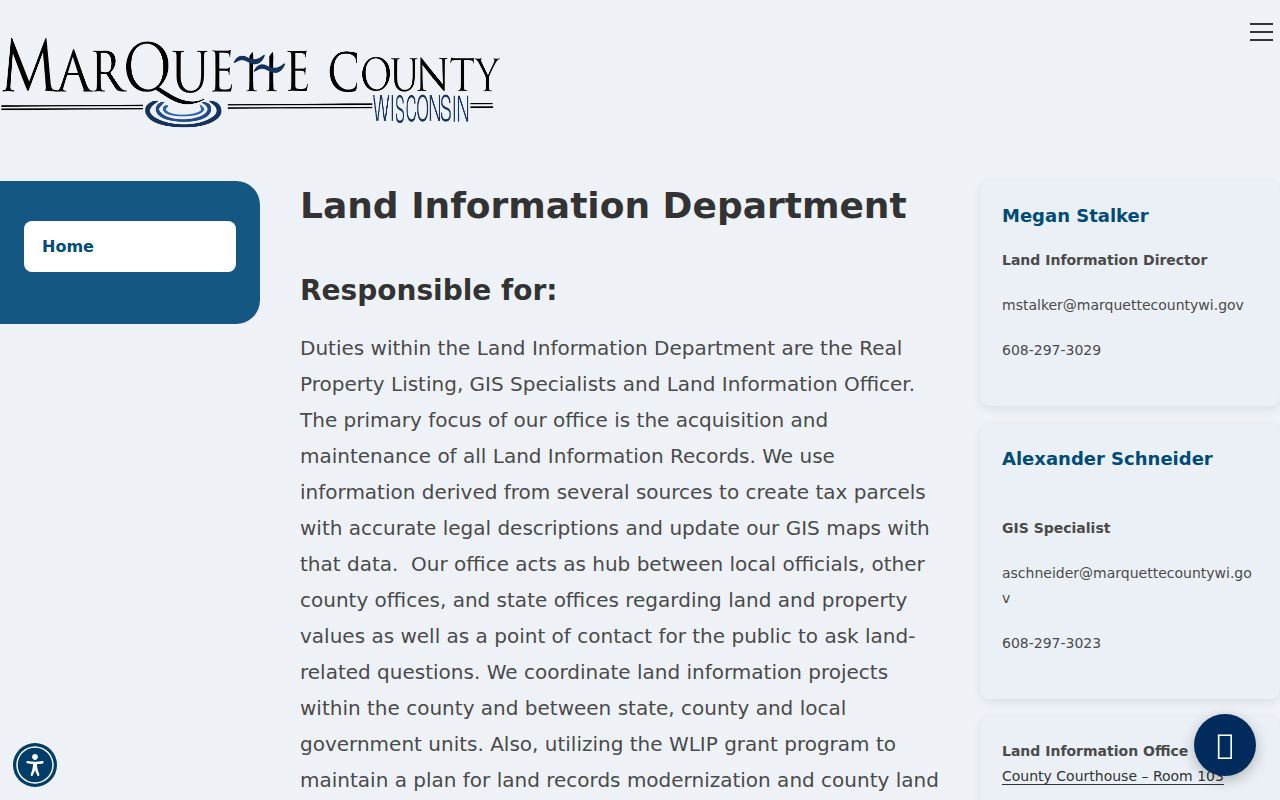
The form changes where county notices are sent, not the recorded owner.
Confirm Ownership in the Deed
Once the county roll points to a likely parcel, find the most recent deed conveying that legal description to the named grantee. Compare the recording date, grantor, grantee and land description. A later instrument, probate filing or transfer-on-death record can change what the roll displays. The Register of Deeds publishes no online year range. So ask at the counter instead of guessing. The deed is your anchor. The Marquette County deed-records page explains the ColorTract drawers, the recorder copy process and the chain-of-title method.
Wisconsin Owner Privacy Limits
Wisconsin's open-records law has exceptions. A balancing test applies as well. Safe at Home gives eligible participants a substitute address, so an ordinary mailing or situs display may be unavailable. Never try to defeat an address-confidentiality program. When a legitimate title matter or tax notice must be served, ask the custodian how to proceed. Ownership research works fine without publishing full mailing details. Keep the purpose narrow and lawful, and never use an owner lookup to threaten, track or harass anyone.
Limits of an Owner Lookup
A name on the Marquette County tax roll proves very little by itself. It does not confirm clear title. It says nothing about who actually lives in the house. Ownership and occupancy are different questions. A deed records only the conveyance described in that one instrument. A title search traces the longer chain of ownership and any claims that might sit against it. Even a parcel map or GIS map falls short of an official survey. The owner of record may be shielded, or the land may have passed through an estate. Ask the proper county custodian instead of guessing at private details.
Lawful use. A Marquette County owner lookup is for property research, a purchase check, local history or civic review. Do not use any record to stalk, intimidate or harass a person.